Why Valley Hills Change the Answer
Brake fluid has one big job besides moving the pedal's push to the wheels. It has to stay liquid when it gets hot. Wikipedia's brake fluid entry says it needs a high boiling point so it won't turn to vapor in the lines, because vapor squeezes and liquid doesn't. A pedal pushing on vapor can sink without stopping the car.
Hills are where that heat comes from. Riding the pedal down a long grade turns speed into heat at the calipers, right where the fluid sits. That is why the California Driver Handbook tells you to shift to a low gear before a steep hill. Ortega Highway into Lake Elsinore is the local example, and summer adds to it. Temecula's August high averages 97.6°F, per the city's climate table.
Water makes it worse. DOT 3, DOT 4 and DOT 5.1 pull moisture out of the air over time, which Wikipedia calls hygroscopic, and that moisture lowers the boiling point. So the grade you pick sets your margin when the fluid is new, and age eats into it from there.
Read the Cap, Then the Manual
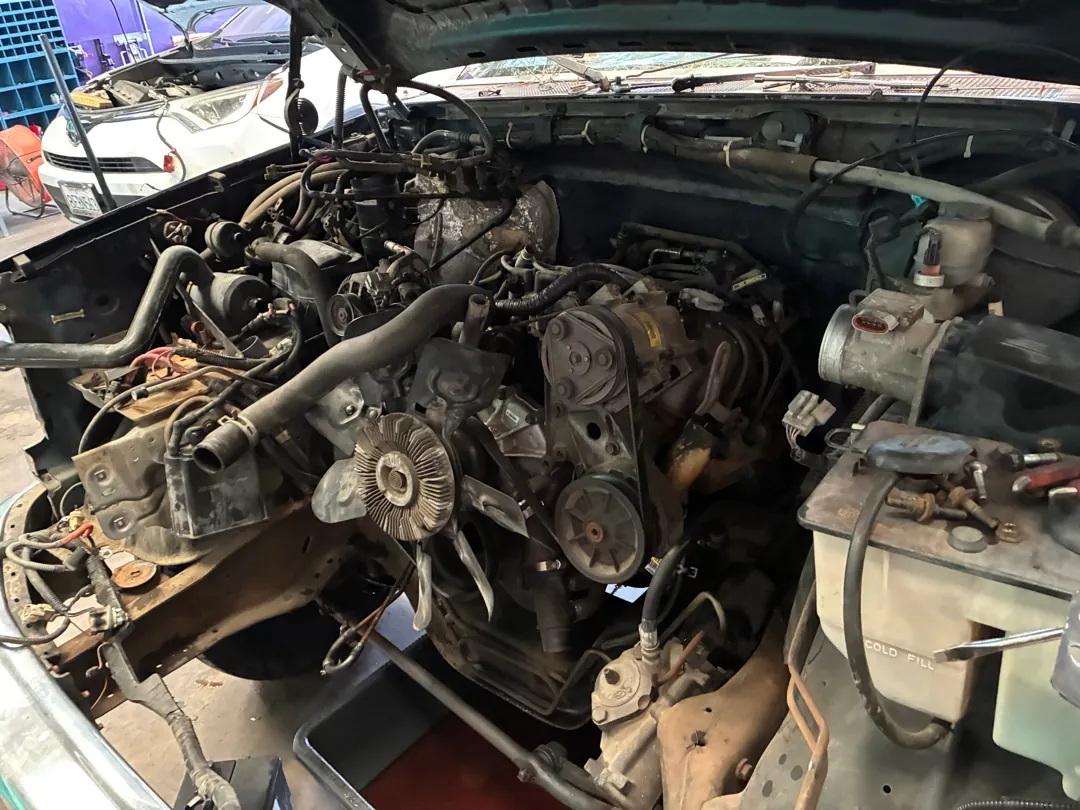
You don't need a parts counter lookup to start. Open the hood and find the small plastic tank on the brake master cylinder, usually on the driver's side near the back of the engine bay. On most cars the grade is molded or printed on the cap.
Then open the owner's manual to the maintenance or fluids section. Toyota's 2012 Tacoma manual names FMVSS No. 116 DOT 3 or SAE J1703 fluid, and says to use only newly opened fluid because it absorbs moisture. That second line matters as much as the first. A half used bottle from the garage shelf has been taking on water since the day it was opened.
Federal rules back this up on every bottle. Under FMVSS No. 116, brake fluid containers must carry the warning to follow the vehicle maker's recommendations when adding fluid. They must also say to store the fluid only in its original container, kept clean and tightly closed.
When the cap and the manual disagree, the manual wins. Newer service information can change what a maker approves, and the Tesla example below shows how.
What Each DOT Number Means
The DOT number is a federal grade, and the main thing it sets is a boiling floor. FMVSS No. 116 requires fresh DOT 3 to boil no lower than 401°F and DOT 4 no lower than 446°F. The wet floors, for fluid that has taken on water, are 284°F for DOT 3 and 311°F for DOT 4. DOT 5 has to reach 500°F dry and 356°F wet.
The wet number is the one to watch. Wikipedia defines wet fluid as 3.7 percent water by volume, and it lists the low viscosity ISO Class 6 grade, often sold as DOT 4 LV, at 482°F dry and 329°F wet. Low viscosity matters for a different reason. That grade can be no thicker than 750 mm²/s at −40°C, against 1,800 for plain DOT 4 under FMVSS No. 116, so it moves faster through ABS and stability control valves.
The base matters as much as the number. Three of the grades are glycol fluids and one is silicone.
| Grade | Base | Color by Law | Mixing |
|---|---|---|---|
| DOT 3 | Glycol | Colorless to amber | Mixes with DOT 4 and 5.1 |
| DOT 4 and DOT 4 LV | Glycol | Colorless to amber | Mixes with DOT 3 and 5.1 |
| DOT 5.1 | Glycol, not silicone | Colorless to amber | Mixes with DOT 3 and 4 |
| DOT 5 | Silicone | Purple | Never mix with the others |
| Mineral oil, LHM | Mineral oil | Green | Only in systems built for it |
The colors in that table are set by law. FMVSS No. 116 requires DOT 5 silicone fluid to be purple and mineral oil to be green, and the glycol grades to run colorless to amber. DOT 5.1 is the trap in the names. Despite the 5, it is a glycol fluid, and it is labeled non silicone base on the bottle.
What Six Cars Actually Call For
Makers don't agree, even inside one brand. These six come straight from each maker's own manual or parts page.
| Car | What the Maker Calls For | Worth Knowing |
|---|---|---|
| Toyota, 2012 Tacoma | DOT 3 or SAE J1703 | Use only newly opened fluid |
| Honda, 2016 Fit | Honda Heavy Duty DOT 3 | DOT 3 or DOT 4 from a sealed bottle only as a stopgap |
| Honda, 2026 Prelude | DOT 3 or DOT 4 | DOT 5 can cause extensive damage |
| Cadillac, XT4 | GM approved DOT 3 only | Wrong fluid can damage the brakes |
| Ford, DOT 3 and DOT 4 LV cars | Motorcraft PM-20, DOT 4 LV | Not for Fords that call for DOT 5.1 |
| Tesla, 2025 Model Y | DOT 4, BASF Hydraulan 404 | The DOT 3 on the cap is a minimum |
Honda shows how much a single brand can vary. The 2016 Fit manual specifies Honda Heavy Duty Brake Fluid DOT 3 and allows DOT 3 or DOT 4 from a sealed container only as a temporary fill. The 2026 Prelude manual simply lists DOT 3 or DOT 4. Both warn that DOT 5 isn't compatible with the car.
GM is stricter. The Cadillac XT4 manual says to use only GM approved DOT 3 from a clean, sealed container, and warns that the wrong or contaminated fluid could damage the brake system. On a car like that, a DOT 4 bottle isn't what the maker asked for, even if it boils hotter.
A Higher Number Is Not Always an Upgrade
It is easy to think DOT 4 beats DOT 3, so DOT 5.1 must beat both. Ford's own fluid page says otherwise. Motorcraft PM-20 is a DOT 4 LV fluid that meets ISO 4925 Class 6. Ford clears it for its cars that specify DOT 4 LV or DOT 3. It also says not to use it in Fords that specify DOT 5.1 or Super DOT 4.
So the rule runs both ways. A fluid can be a fine step up for one car and the wrong pick for the next. Ford also lists a change interval of every three years for PM-20.
Tesla shows the other side. Its 2025 Model Y service manual says the filler cap is marked DOT 3, but that marking is a minimum. The approved fluid is DOT 4 BASF Hydraulan 404, and the manual says to use only new fluid from a sealed container. An owner going by the cap alone would pour in a grade Tesla no longer lists as its approved fluid.
The safe move is plain. Read the manual for your exact year. If it names one grade, use that grade. If it allows a choice, the higher wet boiling point is the better pick for valley hills.
Mixing, Topping Off and the Purple Bottle
The glycol grades are built to get along. Wikipedia says DOT 3, DOT 4 and DOT 5.1 can be mixed, though a full replacement is better for getting the rated performance. FMVSS No. 116 tests that too, mixing each fluid with a reference fluid and failing it if the blend separates or leaves sludge.
Silicone DOT 5 is different. It doesn't mix with water or the glycol fluids, per Wikipedia, and it can foam when ABS cycles. That is why Honda warns against it by name. If you see purple fluid in a car that calls for DOT 3 or DOT 4, don't top it off. Have the system flushed and the seals checked.
Mineral oil is a third family, used by Citroën and Rolls-Royce LHM systems and some bicycle brakes, per Wikipedia. FMVSS No. 116 says it is not compatible with the rubber parts in systems built for DOT fluid. Keep it out of a car.
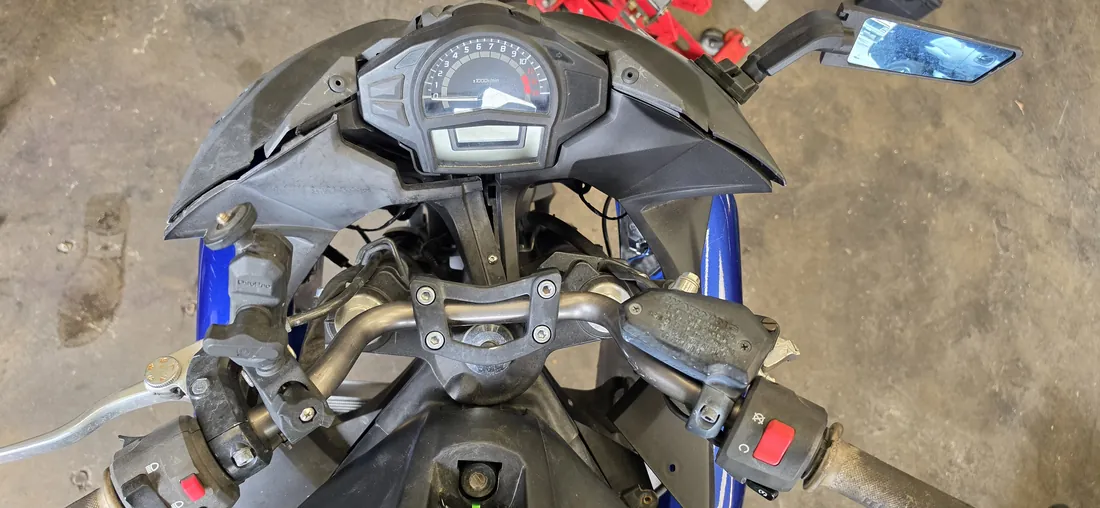
Topping off has a limit, too. Fluid drops slowly as pads wear, so a low level can mean the pads are thin. Honda's Prelude manual says to have leaks or worn pads checked when the level reaches MIN, and the Cadillac manual notes that adding fluid doesn't fix a leak. Temecula Mobile Mechanic also services motorcycle and powersports brakes, where the reservoir is often on the handlebar.
What a Flush Costs Here, and Where Old Fluid Goes
Temecula Mobile Mechanic lists a brake fluid flush at $110 to $160, and recommends one every 2 to 3 years. The car and the grade it needs move the number. The flush is done in your driveway, and it fits in with a pad job on the brake service visit. Every repair carries a 3 year warranty on parts and labor.
Ask what goes in before you approve. The Federal Trade Commission's auto repair basics say to ask why a shop wants service beyond the maker's schedule, and the same goes for a fluid swap. A shop that knows your car can name the grade and point to the line in the manual.
Doing it yourself? Old brake fluid doesn't go in the trash. The county's Murrieta ABOP site on Jefferson Avenue takes antifreeze, batteries, used oil and paint free on Saturdays, and brake fluid isn't on its list. Call the county at 951-486-3200 before you load it, or let the mechanic take it with the job.
Get the Right Grade in the First Time
Not sure what your car takes, or found the wrong color in the tank? Book a visit or call (951) 618-1982. Temecula Mobile Mechanic covers Temecula, Murrieta, Menifee, Wildomar and the rest of the valley.
Fact Check Links
- Code of Federal Regulations, 49 CFR 571.116, FMVSS No. 116 Motor Vehicle Brake Fluids (Cornell LII)
- Wikipedia, Brake Fluid
- Ford Motorcraft, DOT 4 LV High Performance Motor Vehicle Brake Fluid PM-20
- Honda, 2026 Prelude Owner's Manual, Brake Fluid
- Honda, 2016 Fit Owner's Manual, page 370
- Toyota, 2012 Tacoma Owner's Manual, page 417
- Cadillac, XT4 Owner's Manual, Brake Fluid
- Tesla, 2025 Model Y Service Manual, Fluids and Capacities
- Wikipedia, California State Route 74
- Wikipedia, Temecula, California, climate and roads
- California DMV, Driver Handbook, Safe Driving
- Riverside County Department of Waste Resources, Murrieta ABOP and PaintCare Facility
- Federal Trade Commission, Auto Repair Basics