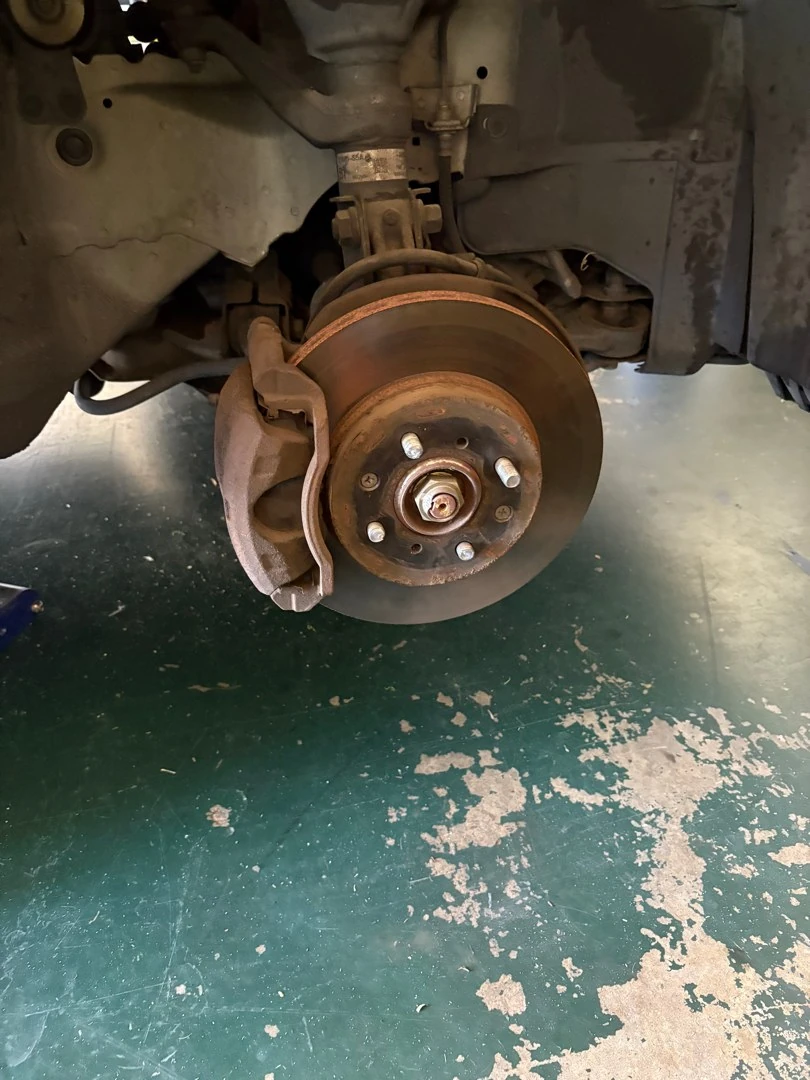
Why This Valley Changes the Answer
Most rotor advice is written for a different climate. Guides warn about salt, and that makes sense where crews treat snowy roads. CBS Sacramento's report on Caltrans road salt says the salt can damage vehicles, and it names the Tahoe basin highways as the concern. Wikipedia calls snow in Temecula rare and gives it half an inch a year.
Take salt away and the local list gets short. Long freeway runs help. Interstate 15 carries valley commuters to San Diego County, and steady miles at speed barely touch the pedal. Temecula Parkway hurts, since it is a six lane city road full of stops.
Hills hurt most. Ortega Highway winds through the Santa Ana Mountains into Lake Elsinore. Riding the pedal down a road like that dumps heat into the rotors, which is why the California Driver Handbook says to shift to low gear before a steep hill.
What 150,000 Miles Asks of a Rotor
Start with time. The Federal Highway Administration puts the average driver at 13,476 miles a year. At that rate, 150,000 miles takes about 11 years, so this is a question for owners who keep their cars. S&P Global Mobility puts the average US vehicle at 12.8 years old, so plenty of cars live that long.
Now look at the published numbers. Nucar Honda says 30,000 to 70,000 miles. R1 Concepts says 50,000 to 70,000. Northside Ford says roughly 70,000. Not one of them reaches half of 150,000 at the top end, which makes this mileage an outlier.
Pads make the point clearer. Northside Ford also gives pads 30,000 to 70,000 miles. So a 150,000 mile rotor has to live through two to five sets of pads. Integrity Tire, a Florida shop, says older rotors used to outlast two or three sets. It also says harder ceramic pads and thinner factory rotors have cut into that, though it gives no measurement of how much.
Thickness Decides, Not the Odometer
A rotor gets thinner each time pads ride on it, and it has a hard limit. Wikipedia's disc brake entry says to replace a disc when it reaches the maker's minimum thickness, a number usually cast into the hub or the edge. Mileage doesn't appear anywhere in that rule.
The margin is smaller than drivers think. Saab's service manual for the 2011 9-5 sets the front discard at 27 mm and the lowest refinish thickness at 28 mm. That is one millimeter between a rotor a shop can machine and one it has to scrap.
The same manual shows how a proper check is done. Use a micrometer, not a ruler or a fingernail. Measure at four or more points around the rotor, about 13 mm in from the outside edge, and use the lowest reading.
Ask for that number. A shop that measured can read it to you beside the stamped limit. If the only evidence is the miles or a look through the spokes, ask them to pull the wheel. The Federal Trade Commission's auto repair basics tell you to ask a shop why it wants service beyond the maker's schedule, and that question fits here too.
Which Cars Actually Get There
Two owners with the same model can get very different rotor life. The way the car gets used sets the odds.
| Car and Driving | What It Does to Rotors | Odds of 150,000 Miles |
|---|---|---|
| Hybrid or EV, normal miles | The motor does most of the slowing | Best shot, but check for rust |
| Light car on a long I-15 commute | Few hard stops and little heat | Possible if pads never reach metal |
| Mixed city and freeway driving | Far more stops on roads like Temecula Parkway | Unlikely, plan on one rotor change |
| Truck, towing or Ortega Highway weekends | Weight, heat and long descents | Rare |
| Car that sits for weeks at a time | Rust grows on the face between drives | Miles stop mattering, condition decides |
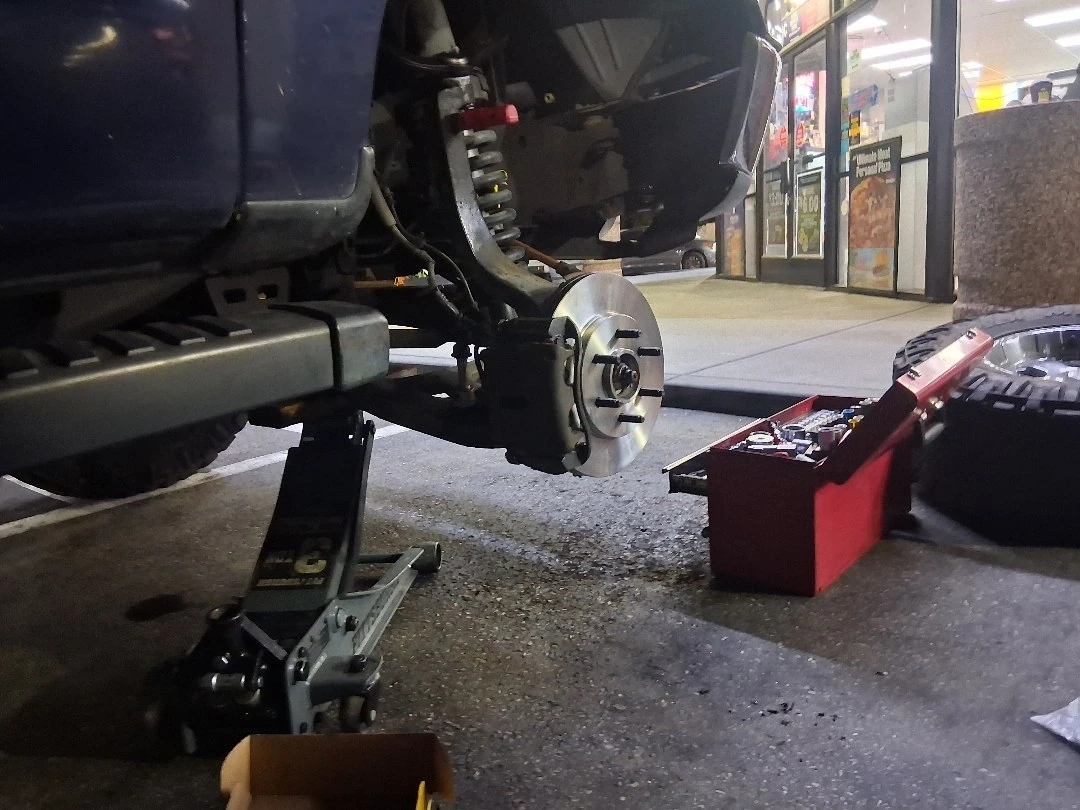
Pad timing is the piece you control. Temecula Mobile Mechanic's brake page puts it plainly. A squeal usually means you have a few weeks. A grind means the backing plate is on the rotor, and rotors that could have been reused are now scrap. Run one set of pads to the metal and the 150,000 mile plan ends that day.
Stuck hardware matters as well. A sticking slide pin wears one pad about twice as fast as the other, per the same page. That loads one face of the rotor harder, and it is a cheap fix when you catch it early.
Hybrids Get the Miles and a New Problem
If any car reaches this number, it is likely a hybrid or an EV. The motor does most of the slowing, and the rotors sit idle. A General Motors engineer's SAE paper calls the drop in friction brake use dramatic, and says little research had looked at what it does to the brakes. Corrosion and off brake wear are the concerns it names.
So miles stop being the test on these cars. Friction brakes still handle hard stops, and a rotor that spends its life cold can rust, even in a dry valley. Wikipedia notes that rust can lead to warping when brakes go back in use after storage.
Two habits help. Make a firm stop now and then, on an empty road, so the pads clear the face. And have the wheels pulled at a service visit, since the back of a rotor and the caliper pins can't be judged through the spokes.
Shakes, Grooves and Cracks
Thickness isn't the only way out. A rotor with plenty of metal can still be done, and three things decide it early.
The shake comes first. Many rotors called warped really have uneven pad material on the face, per Wikipedia, and drivers feel it at about 0.17 mm of thickness variation. Uneven lug nuts can cause it, so ask for a torque wrench on the wheels.
Grooves come next. A light groove is fine with new pads. Pennsylvania's inspection rule, cited in the same entry, fails a disc scored deeper than 0.015 inch. Use that as a yardstick and ask the shop for the depth it found.
Cracks end the argument. Small hairline cracks can be normal on drilled rotors, but they can't be repaired, and a severe one means replacement.
The Federal Trade Commission says to get any grinding or scraping when you stop looked at, along with a car that pulls or a pedal that sinks. Any of those beats the miles on the odometer as a reason to act.
What Keeping or Replacing Costs Here
Temecula Mobile Mechanic lists new pads and rotors at $220 to $420 per axle, parts and labor, with mid grade ceramic pads. Vehicle, parts tier and access move the number. The work takes about an hour per axle in your driveway, and every repair carries a 3 year warranty on parts and labor.
How much does a good rotor save you? Data for Trades counted posted shop prices and found a median of $180 per axle for pads at 197 shops, and $312 for pads and rotors at 82 shops. That rough gap of $132 per axle is what keeping sound rotors is worth.
So keep them when the reading leaves room for another full set of pads. If it doesn't, $132 today can cost you a second labor bill in a few years. Machining rarely saves the day, since factory rotors are thin and new ones often cost less than the labor to cut them.
California law backs you either way. A shop must give you an estimate and get your approval first, per the Bureau of Automotive Repair. You can also ask for your old parts back, as long as you ask before you approve.
Get Your Rotors Measured
If you're nearing a pad job, or you bought a car with big miles and no brake records, a reading settles it. Book a visit or call (951) 618-1982. Temecula Mobile Mechanic covers Temecula, Murrieta, Menifee, Wildomar and the rest of the valley.
Fact Check Links
- Wikipedia, Temecula, California, climate and roads
- Wikipedia, Disc Brake
- Saab service manual, 2011 9-5, Brake Rotor Thickness Measurement
- Federal Highway Administration, Average Annual Miles per Driver
- SAE International, Effect of Regenerative Braking on Foundation Brake Performance
- California DMV, Driver Handbook, Safe Driving
- CBS Sacramento, Salt Used by Caltrans on Snowy Roads
- S&P Global Mobility, US Vehicle Age, May 2025
- Federal Trade Commission, Auto Repair Basics
- California Bureau of Automotive Repair, Auto Repairs consumer page
- Nucar Honda of Norwood, How Long Do Brake Rotors Last
- Northside Ford, How Long Do Brake Pads and Rotors Last
- R1 Concepts, How Often Should You Replace Brake Rotors
- Integrity Tire, How Long Do Brake Rotors Last